Hackers Turn Trusted Windows Software Downloads Into Tools for Secretly Controlling PCs

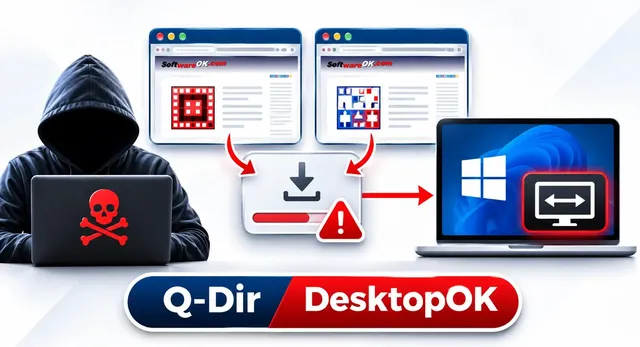
Tampered installers for the Windows utilities Q-Dir and DesktopOK were used to deliver a Python-based remote access trojan in a software supply chain attack. Researchers from AhnLab Security Intelligence Center discovered the malicious updates on November 26, 2026, affecting specific versions of both applications. The trojan established persistence via Windows scheduled tasks, retrieved files using an embedded 7-Zip tool, and communicated with a command-and-control server. Operators gained capabilities to execute shell commands, capture screens, and extract system data, while checking processes against numerous security products. Users are advised to uninstall affected versions, verify SHA-256 hashes against official releases, and scan for unauthorized scheduled tasks.